 GenX Pro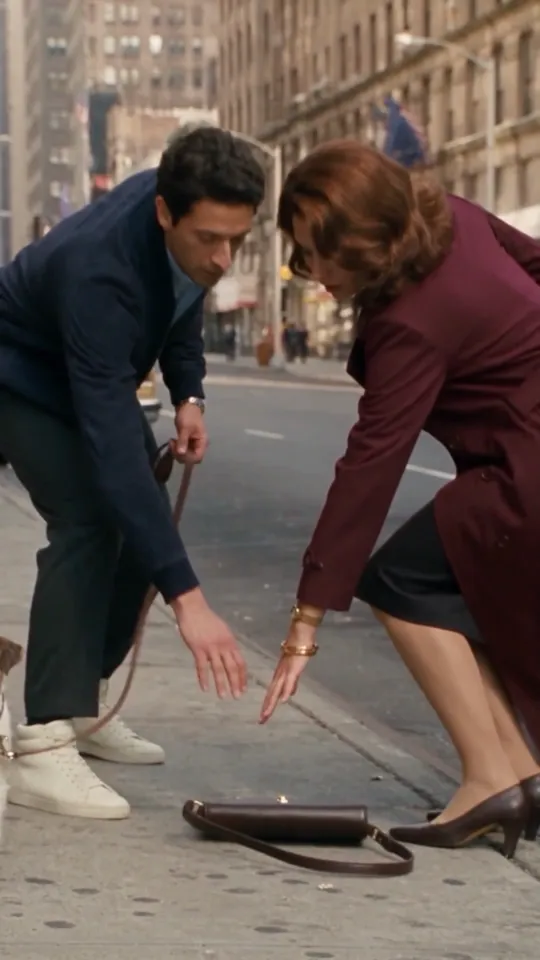
The story
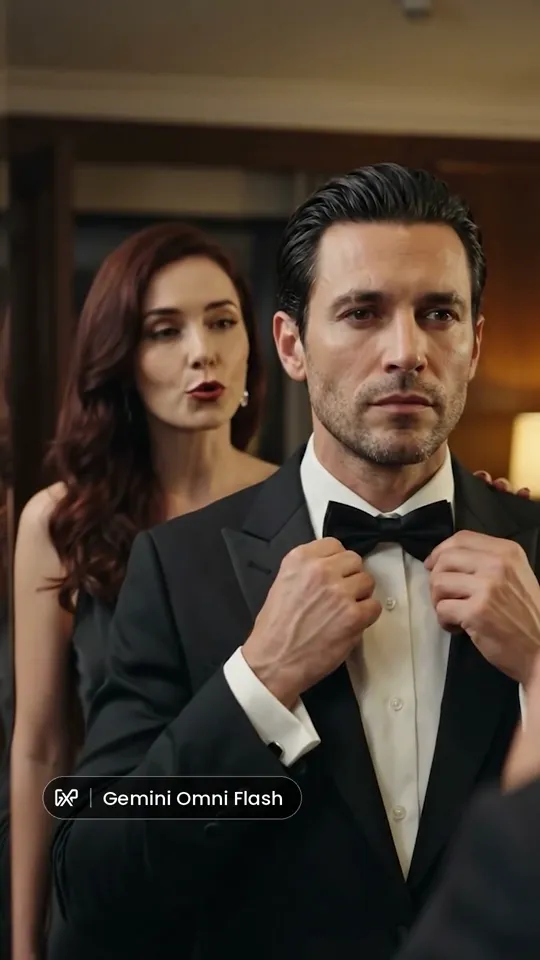
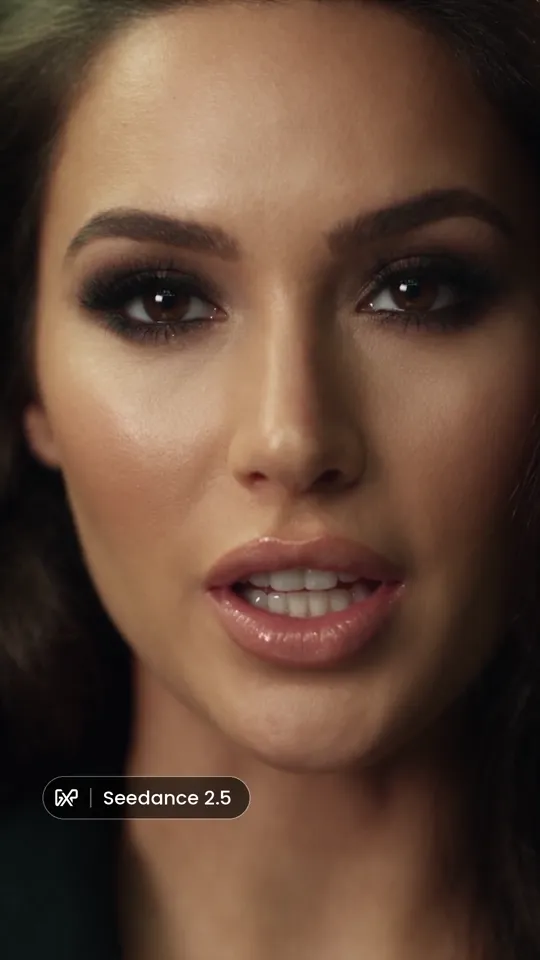
Warm lamps, dark walnut, rain running down tall windows. She's across the table from a man who hasn't looked up since they sat down.
Her eyes move past him to the couple behind. He turns fully toward his wife and takes her hand. They look at each other the way nobody has looked at her all evening. The old woman catches her watching, and gives her the smallest knowing look.
She puts her napkin on the table, picks up her bag, stands, glances back once — and goes.
Her date keeps scrolling. Then he looks up at an empty chair.
What's The Generation Sequence for This?
| Step | Where | Model |
|---|---|---|
| 1–4 | Image | Nano Banana Pro — four character sheets |
| 5 | Image | Nano Banana Pro — the restaurant |
| 6 | Video | Seedance 2.5 Reference — the whole film |
| 7 | Audio | Lyria 3 Clip Preview — one cue |
Steps 1–4 — The cast
Four people, four sheets, same recipe each time: three panels on grey — front wardrobe, back view, hero portrait.
The headless front panel is deliberate. It reads as a garment display rather than a second person, and it gives the video model the clothes from the front without a competing face.
Nobody is a villain. The date is emotionally absent, not cruel. The elderly couple are warm, not frail. Every one of these sheets says so explicitly, and it matters — ask for a bad boyfriend and you get a smirk, which turns a quiet film into a soap opera.
Step 1 — The protagonist
MODEL: GenX Pro -> Image → Nano Banana Pro.
Settings: 16:9.
Create a photorealistic 16:9 production character sheet arranged as exactly
three equal vertical panels separated by thin white dividers. Use one uniform
neutral light-gray seamless studio background, soft clean catalog lighting,
realistic skin texture, and the same original woman with identical identity,
hair, body proportions, wardrobe, accessories, and color across all three
panels.
CHARACTER: an attractive contemporary American woman, age 29, fair warm skin
with subtle natural freckles, clear blue-green eyes, softly defined brows,
refined facial features, and long strawberry-blonde hair styled in polished
loose waves with a natural side part. She should have the elevated but
believable appearance of a premium US fashion advertisement, with realistic
pores, natural facial asymmetry, restrained makeup, and no celebrity
resemblance. Her personality is emotionally perceptive, self-possessed, elegant,
and quietly decisive.
LOCKED WARDROBE: fitted black long-sleeve midi dress with a refined asymmetric
neckline, clean tailoring, and a straight below-knee hem; black pointed-toe
pumps; small sculptural gold drop earrings; a slim gold bracelet; and one small
structured black top-handle handbag. No visible branding.
LEFT PANEL: show a complete straight-on front wardrobe view from a clean open
neck base through both shoes. The head is intentionally absent as a clean,
non-graphic editorial garment display, not cropped by the frame. Leave visible
gray margin above the entire neck opening, around both shoulders, beside both
hands, and below both shoes. The full body, complete neckline, shoulders, arms,
hands, handbag, dress hem, legs, and shoes must all be visible inside the panel.
Do not place hair, a face, jaw, chin, or partial head in this panel.
CENTER PANEL: show the same woman in a complete straight-on back view from the
top of her head through both shoes. Preserve her long strawberry-blonde waves,
exact dress, handbag, body proportions, hands, legs, and footwear. Neutral
upright posture, full body visible with clear margin above the hair and below
the shoes.
RIGHT PANEL: show a detailed front-facing shoulders-up hero portrait of the same
woman. Preserve the exact strawberry-blonde hair, blue-green eyes, subtle
freckles, earrings, asymmetric neckline, complexion, and facial proportions. Use
a calm, emotionally aware expression with a closed neutral mouth and subtle
strength in the eyes.
Maintain realistic anatomy, authentic tailoring, clean panel separation, and
exact identity continuity. Avoid text, labels, logos, props other than the
handbag, additional people, visible head in the left panel, cropped neck
opening, cropped shoulders, cropped hands, cropped shoes, inconsistent dress
neckline or hem, changing handbag, changing jewelry, different hair color or
length, glamour retouching, plastic skin, heavy makeup, exaggerated smile,
blurred face, duplicate limbs, malformed fingers, warped shoes, inconsistent
identity, celebrity likeness, extra panels, collage elements, or watermark."A calm, emotionally aware expression with subtle strength in the eyes." The whole film happens on this face. Prompt the sheet for the register you need in the close-up, not for a neutral headshot.
Step 2 — The date
MODEL: GenX Pro -> Image → Nano Banana Pro.
Settings: 16:9.
Create a photorealistic 16:9 production character sheet with three equal
vertical panels, thin white dividers, a neutral light-gray seamless studio
background, even catalog lighting, realistic skin texture, and the same identity
and wardrobe preserved precisely across every panel.
Character: an original man, age 33, light-olive complexion, lean average build,
angular oval face, dark-brown eyes, naturally straight brows, defined nose,
clean-shaven jaw, and short dark-brown hair with subtle texture and a neat side
sweep. He is polished, attractive, socially confident, and emotionally
distracted rather than cruel or villainous. Locked wardrobe: charcoal
unstructured single-breasted dinner jacket, pale stone open-collar dress shirt
with no tie, tailored dark trousers, slim black leather belt, polished black
leather loafers, and a minimal stainless-steel wristwatch. Refined contemporary
dinner styling, no visible branding.
LEFT PANEL: complete straight-on front wardrobe view from a clean neck base
through both shoes. The head is intentionally absent as a clean non-graphic
editorial garment display. Leave visible margin above the neck and below the
shoes so the body, hands, trousers, and footwear are not cropped. Arms rest
naturally at his sides; empty hands with no phone or props.
CENTER PANEL: complete straight-on back view of the same man, including his
head, hairstyle, jacket construction, trousers, hands, and both shoes. Neutral
posture, full body fully visible, no crop.
RIGHT PANEL: detailed shoulders-up hero portrait of the same man facing the
camera. Neutral closed mouth, controlled self-assurance, and a faint sense of
emotional distance in the eyes without anger, menace, or an exaggerated
expression. Show realistic pores, subtle under-eye texture, natural facial
asymmetry, and accurate hair detail. Preserve the exact hairstyle, complexion,
facial proportions, shirt, jacket, and identity.
Maintain realistic human anatomy and authentic tailoring. Avoid text, labels,
logos, phone, props, additional people, tie, pocket square, beard, mustache,
jewelry changes, wardrobe changes, color shifts, glamour retouching, heavy skin
smoothing, exaggerated smirk, angry expression, villain styling, blurred face,
shallow-focus studio background, cropped hands, cropped shoes, duplicate limbs,
malformed fingers, asymmetrical eye placement, inconsistent identity, or a
copied celebrity likeness.No phone on the sheet. The phone belongs to the video prompt, where it has to be held and used. Put it here and it becomes part of his silhouette.
Step 3 — The elderly woman
MODEL: GenX Pro -> Image → Nano Banana Pro.
Settings: 16:9.
Create a photorealistic 16:9 production character sheet with three equal
vertical panels, thin white dividers, a neutral light-gray seamless studio
background, even catalog lighting, realistic skin texture, and the same identity
and wardrobe preserved precisely across every panel.
Character: an original American woman, age 76, light warm complexion, petite
average build, softly lined oval face, kind brown eyes, naturally sparse gray
brows, gentle smile lines, and a neat chin-length silver bob with a soft side
part. She is perceptive, warm, quietly playful, and emotionally intelligent,
never frail or caricatured. Locked wardrobe: refined plum-colored collarless
jacket over a soft ivory blouse, tailored charcoal trousers, low black leather
pumps, small pearl stud earrings, and a simple gold wedding band. Elegant
contemporary restaurant attire, understated and realistic, no visible branding.
LEFT PANEL: complete straight-on front wardrobe view from a clean neck base
through both shoes. The head is intentionally absent as a clean non-graphic
editorial garment display. Leave visible margin above the neck and below the
shoes so the body, hands, trousers, and footwear are not cropped. Arms rest
naturally at her sides; empty hands with no props.
CENTER PANEL: complete straight-on back view of the same woman, including her
head, silver bob, jacket construction, trousers, hands, and both shoes. Neutral
upright posture, full body fully visible, no crop.
RIGHT PANEL: detailed shoulders-up hero portrait of the same woman facing the
camera. Closed-mouth expression with a subtle knowing warmth in the eyes, as if
she understands something without saying it. Show authentic age lines, realistic
pores, natural facial asymmetry, and accurate silver hair detail. Preserve the
exact face, hairstyle, complexion, blouse, jacket, and identity.
Maintain realistic elderly anatomy and authentic tailoring. Avoid text, labels,
logos, props, additional people, handbag, hat, glasses, necklace, dramatic
jewelry, skirt, wardrobe changes, color shifts, glamour retouching, artificially
smooth skin, exaggerated wrinkles, exaggerated grin, sadness, confusion,
frailty, caricature, blurred face, cropped hands, cropped shoes, duplicate
limbs, malformed fingers, inconsistent identity, or a copied celebrity likeness."As if she understands something without saying it." She gets one glance in the entire film and it's the moment the story turns. Build that look into the sheet.
Step 4 — The elderly husband
MODEL: GenX Pro -> Image → Nano Banana Pro.
Settings: 16:9.
Create a photorealistic 16:9 production character sheet with three equal
vertical panels, thin white dividers, a neutral light-gray seamless studio
background, even catalog lighting, realistic skin texture, and the same identity
and wardrobe preserved precisely across every panel.
Character: an original American man, age 78, light warm complexion, lean average
build, gently lined rectangular face, attentive brown eyes, natural gray brows,
clean-shaven jaw, and neatly combed short silver hair with a receding hairline.
He is calm, considerate, observant, and deeply attentive to his wife, never
weak, comic, or sentimental in an exaggerated way. Locked wardrobe: fine-knit
navy cardigan worn open over a pale blue button-down shirt, charcoal tailored
trousers, dark brown leather belt, polished dark brown leather shoes, a simple
steel wristwatch, and a plain gold wedding band. Refined contemporary restaurant
attire, understated and realistic, no visible branding.
LEFT PANEL: complete straight-on front wardrobe view from a clean neck base
through both shoes. The head is intentionally absent as a clean non-graphic
editorial garment display. Leave visible margin above the neck and below the
shoes so the body, hands, trousers, and footwear are not cropped. Arms rest
naturally at his sides; empty hands with no props.
CENTER PANEL: complete straight-on back view of the same man, including his
head, silver hair, cardigan construction, trousers, hands, and both shoes.
Neutral upright posture, full body fully visible, no crop.
RIGHT PANEL: detailed shoulders-up hero portrait of the same man facing the
camera. Neutral closed mouth with patient warmth and quiet attentiveness in the
eyes. Show authentic age lines, realistic pores, natural facial asymmetry, and
accurate silver hair detail. Preserve the exact face, hairstyle, complexion,
shirt, cardigan, and identity.
Maintain realistic elderly anatomy and authentic tailoring. Avoid text, labels,
logos, props, additional people, hat, glasses, tie, blazer, beard, mustache,
dramatic jewelry, wardrobe changes, color shifts, glamour retouching,
artificially smooth skin, exaggerated wrinkles, exaggerated smile, sadness,
confusion, frailty, caricature, blurred face, cropped hands, cropped shoes,
duplicate limbs, malformed fingers, inconsistent identity, or a copied celebrity
likeness.Step 5 — The restaurant
MODEL: GenX Pro -> Image → Nano Banana Pro.
Settings: 16:9. Empty — no people at all.
Create a photorealistic 16:9 cinematic environment reference showing a
completely empty, original upscale restaurant during a rainy evening. This is a
clean location-design asset for video generation, not a starting frame. Do not
include any people or principal characters.
RESTAURANT DESIGN: create an intimate, sophisticated dining room with dark
walnut wall panels, tall rain-streaked windows along one side, muted brass
accents, deep green indoor plants, warm ceiling pendants, and subtle blue-hour
reflections from outside. The interior lighting is predominantly warm amber,
balanced naturally against the cool rainy windows. The restaurant should feel
active and lived-in despite being temporarily empty.
TABLE CONSISTENCY: every dining table must use exactly the same design and
proportions. Use matching round dark-wood pedestal tables, approximately 90
centimeters wide, each covered with the same fitted ivory tablecloth. Do not mix
round, square, or rectangular tables. Every chair must also use the same design:
dark-walnut frames with muted taupe upholstered seats and backs.
Arrange six matching tables naturally throughout the restaurant with
approximately fourteen matching chairs. Avoid a rigid grid or perfect symmetry.
Slightly rotate selected tables and chairs to create a believable restaurant
arrangement while preserving consistent furniture design.
STORY LAYOUT: position one primary two-person table in the nearer foreground
with two chairs facing each other. Position a second matching table
approximately 2.5 meters behind and slightly to the right, prepared for an
elderly couple. Keep a clear visual corridor between these two tables so someone
seated at the foreground table can naturally observe the rear table. Place the
remaining matching tables around the sides and deeper background without
blocking this sightline.
Use the same small warm cream-glass table lamp on every table. Give every table
consistent understated place settings: two clear water glasses, white ceramic
plates, polished silverware, and neatly folded neutral napkins. Keep table scale
and object placement realistic.
CAMERA: natural seated eye-level perspective using a 35mm full-frame lens look.
Use an asymmetrical three-quarter view that clearly communicates the
relationship between the foreground table and the table behind it. Keep the
complete environment readable with natural depth and no heavy background blur.
The image should feel like a cinematic location scout photograph, not an
advertisement or furniture showroom.
Maintain realistic architecture, physically accurate furniture, consistent
tablecloth length, consistent chair dimensions, natural reflections, realistic
rain, and restrained cinematic lighting.
Avoid people, diners, staff, faces, silhouettes, human reflections, characters,
mixed table shapes, rectangular tables, square tables, different chair designs,
inconsistent tablecloths, mismatched lamps, oversized tables, duplicated
furniture, overlapping chairs, banquet-hall arrangement, wedding styling,
nightclub styling, hotel-lobby appearance, excessive empty floor space,
excessive blue lighting, dominant glass roof, perfect symmetry, shallow depth of
field, extreme bokeh, fisheye distortion, ultra-wide distortion, text, logos,
signs, watermarks, warped furniture, floating objects, impossible reflections,
or copied restaurant designs.Design the sightline, not the room. Two tables, 2.5 metres apart, with a clear corridor between them so someone at the front table can see the back one. That geometry is the film — she can only notice the couple if the room lets her. Everything else in this prompt is decoration around that one requirement.
Ask for identical tables and chairs, repeatedly. Left alone the model produces a furniture catalogue — round here, square there, three chair designs. Matching furniture is what makes a room read as one restaurant.
No shallow depth of field on the location asset. You want the whole space readable so the video prompt can choose what to blur. Bake in bokeh here and you lose the rack focus that carries the middle of the film.
Step 6 — The film
MODEL: GenX Pro -> Video → Seedance 2.5 Reference.
Settings: 9:16 · 720p · duration 15 seconds · audio on.
Attach the five images. Address them by the names below, or by whatever you've called your files.
Create one 15-second photorealistic vertical 9:16 cinematic restaurant
narrative.
REFERENCE ASSIGNMENTS: @Protagonist controls only the blonde protagonist's
identity, face, long strawberry-blonde hair, black asymmetric-neckline midi
dress, gold earrings, black heels, handbag, body proportions, and wardrobe.
@Date controls only the date's identity and charcoal suit. @ElderlyWoman and
@ElderlyHusband control only the elderly couple's identities and wardrobe.
@Restaurant controls only the restaurant architecture, dark walnut walls, rainy
windows, warm lamps, matching tables, chairs, materials, and spatial layout. Do
not reproduce any character-sheet panels, dividers, gray studio backgrounds, or
headless displays. No image is a literal starting frame.
STORY AND GEOGRAPHY: The protagonist and distracted date sit opposite each other
at the foreground table. The date remains screen-left or in the near foreground;
the protagonist remains center-right. The elderly married couple stay together
at a separate table behind her. Keep several anonymous diners seated at the
surrounding tables throughout the entire scene, including after the protagonist
leaves. They remain softly out of focus and never block the principal action.
Nobody changes tables or duplicates.
VISUAL LANGUAGE: intimate premium US fashion-film casting and restrained
cinematic realism. Use an ARRI Alexa 35 and ARRI Signature Prime look, warm
practical highlights, realistic skin, shallow optical depth of field, close
emotional framing, stable camera movement, and clean hard cuts. Preserve the
emotional rhythm of a short observational restaurant film: distracted date,
realization, affectionate contrast, decision, departure, and late reaction.
0.0-3.0: Seated eye-level over-table medium close shot from slightly behind the
date. His softly blurred shoulder and hands frame the lower-left foreground
while he actively scrolls and taps one black smartphone. The bright but
unreadable interface visibly changes as he scrolls. Keep the protagonist sharp.
She looks at him with restrained disappointment, then shifts only her eyes
toward the elderly couple behind her. Do not let her smile yet.
3.0-6.2: Hard cut to an intimate close-up of the protagonist. Her eyes track the
couple off-screen. Show a quiet breath, slight tension in her jaw, a tiny eyelid
change, and gradual emotional recognition. Her expression moves from hurt and
disappointment toward a very restrained, bittersweet softness. No speech and no
exaggerated head movement.
6.2-9.2: Hard cut to a tight layered composition. Begin with the protagonist in
soft partial foreground profile, then perform one slow optical rack focus to the
elderly couple. The husband turns fully toward his wife and gently covers her
hand with his. They exchange warm, attentive eye contact and a small natural
smile. The elderly woman briefly notices the protagonist with a subtle knowing
look. Show only the couple at their table; other diners belong to clearly
separate background tables. Maintain accurate hands and eyelines.
9.2-13.2: Hard cut back to the opening axis, closer than the first shot. The
protagonist returns a faint bittersweet look, then her face settles into quiet
resolve. She removes the napkin from her lap, places it on the table, pushes her
chair back, grips her handbag, stands, pauses for one emotional beat, glances
back once with visible disappointment and finality, then walks decisively out of
frame. Her departure must clearly read as leaving the date, not going briefly to
the restroom. The date continues scrolling through a visibly changing unreadable
phone interface, then looks up one beat too late.
13.2-15.0: Hold on the empty chair and the date's delayed reaction. Keep the
elderly couple and several anonymous diners softly active in the background.
Minimal natural movement and no new characters.
CONTINUITY: preserve every identity, hairstyle, wardrobe item, seat, lamp,
table, glass, plate, chair, handbag, and phone across every cut. Exactly one
smartphone. No character swaps, morphing, duplicated people, disappearing
diners, frozen phone screen, malformed hands, extra fingers, changing furniture,
speaking mouths, crying, arguments, broad smiles, melodrama, camera-facing
extras, zooms, handheld shake, slow motion, flicker, exposure shifts, text,
captions, logos, watermarks, attribution badges, or end cards.
AUDIO: generate only continuous low restaurant ambience, gentle rain, indistinct
distant murmur, quiet glassware, subtle phone taps, fabric, chair movement, and
departing footsteps. No dialogue, intelligible words, voiceover, singing, or
music."Do not let her smile yet." Four words doing enormous work. Without them she softens in the first shot and the recognition has nowhere left to go.
Name the phone screen as a moving object. "A bright but unreadable interface that visibly changes as he scrolls." A frozen screen is the single clearest tell that a generated scene isn't alive, and it's the kind of detail no model adds on its own.
Ask for the anonymous diners explicitly, and say they stay after she leaves. An empty restaurant behind the action reads as a set. Diners who vanish between cuts read as a bug.
Specify one smartphone. Continuity lists are cheap and props multiply.
Step 7 — The music
MODEL: GenX Pro -> Audio → Lyria 3 Clip Preview.
Trim the generated music to fit the video.
Create an original instrumental cinematic cue for a quiet emotional restaurant
scene.
Mood: intimate, reflective, emotionally restrained, warm, and quietly
empowering. The music should support a woman recognizing the difference between
emotional absence and genuine attentiveness without becoming melodramatic.
Use delicate felt piano, a warm analog synth pad, and very soft cinematic
strings. Keep the arrangement minimal and elegant, with no heavy percussion.
Around 5 seconds, allow the strings to enter subtly as attention shifts toward
the elderly couple. Around 8 seconds, brighten the harmony as their affectionate
gesture becomes clear. Around 11 seconds, create a gentle emotional lift as the
protagonist decides to leave, then resolve into a smooth natural fade by 15
seconds. Let the remaining time decay quietly.
Leave enough space for quiet restaurant ambience, rain, tableware, chair
movement, and footsteps. Instrumental only. No vocals, lyrics, spoken words,
humming, chanting, dialogue, embedded sound effects, abrupt transitions,
aggressive drums, trailer-style impacts, comedy, horror, excessive
sentimentality, or sudden volume changes. Create a completely original
composition and do not imitate, quote, interpolate, or reproduce any
recognizable song, melody, recording, soundtrack, composer, or artist.Give the cue the film's timeline. Strings at 5, harmony brightens at 8, lift at 11. A prompt that just says "reflective piano, 15 seconds" gives you fifteen seconds of wallpaper; this arrives on the right frames.
Lay it under the generated ambience, not over it. The rain, the glassware and the chair are what make the room real — the music only says what the look meant.
Make it your own
Log in to GenX Pro or create a free account, then open the App and try these prompts.